


Good morning, everyone.
This week’s newsletter includes: A ton of free prime real estate, how to build relationship capital before you need it, and a brand shiny new section to enjoy - Finance Culture.
How To Build “Relationship Capital”
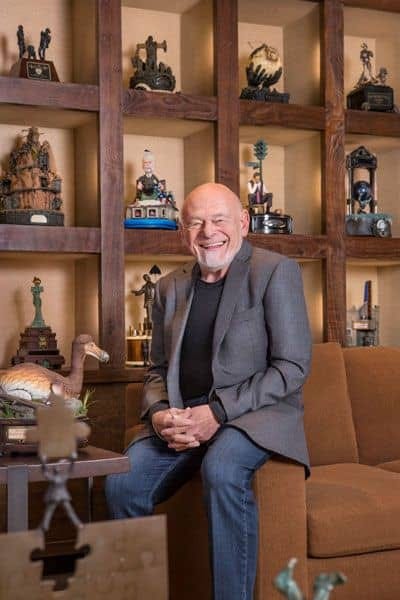
In the 1970’s Sam Zell built a billion-dollar real estate empire without paying a dime. Here’s the unbelievable true story of relationships, reputation and a gutsy phone call…
In the early 1970s, Sam Zell wasn’t a billionaire, he wasn’t even a major player. He was just another real estate investor trying to make his mark.
But he had one advantage everyone seemed to overlook - his relationships.
At the time, the U.S. real estate market was in turmoil. Rising interest rates and a struggling economy meant banks were overloaded with foreclosed buildings they couldn’t sell. Landlords were defaulting on loans and institutional investors were doing anything to get out.
No-one had the guts to go near these distressed assets.
In the midst of this turmoil, Sam calmly stated: “I have an innate belief that the world is not coming to an end.”
He noticed that banks were so desperate to shift property off their balance sheets, they might even give an asset away for free to anyone willing to take on the debt.
Win-win.
Sam picked up the phone to the banks and asked a question no one else dared to:
“Do you have any buildings you’d give away for free?”
And it turned out, they actually did…
Well - kind of.
In the prior 15 years, Sam had built a student housing portfolio, creating a huge network of relationships with landlords and banks. When the call came in from Sam, the banks already knew and trusted him. He had “Relationship Capital.”
One of Sam’s most legendary acquisitions was a skyscraper in Chicago. Allegedly, he acquired the building for just $1 - simply by taking over the previous owner’s defaulted loan.
In another deal, Sam reportedly acquired a huge high-rise apartment block. According to real estate insiders, he picked up the building for a tiny fraction of its original value.
This short period of time was arguably the most important in his entire career. By the late 1980s, his firm, Equity Group Investments, controlled one of the largest real estate portfolios in the United States.
Sam reflected on that crazy time, and how he was even considered for those opportunities:
“Reputation is your most important asset. Everything you do, everything you say, is a part of the permanent record. Your name reflects your character.”Paul Tudor Jones lost 70% of his fund on one catastrophic trade. Here’s how unbelievable failure turned him into a trading legend…
In 1979, Paul Tudor Jones was a young, ambitious trader making bold bets in the cotton market. Known for his confidence, he had built a reputation as a rising star.
But one fateful trade almost destroyed his entire career.
Paul placed an enormous, highly levered long position, confident the market was on the verge of a rally. Instead, prices collapsed.
“I knew immediately the market was going down, and it was my blood that was going to carry it there,” he recalled. As the market plummeted, he scrambled to exit his position, but it was too late.
The losses were staggering - 70% of his clients’ equity was wiped out. Paul turned to his colleague and said: “I am not cut out for this business. I don’t think I can hack it much longer.”
The loss was so catastrophic that he faced a choice: quit trading or learn from his mistake.
Determined to rebuild, Paul created a new risk management strategy and became obsessed with discipline. He set strict rules for cutting losses quickly, never risking more than 1-2% of his capital on a single trade.
Paul’s new philosophy was - survival first, profits second.
This approach was transformative. By the mid-1980s, he established Tudor Investment Corporation, and was delivering annual returns exceeding 100%. His most famous moment came in 1987 when he correctly predicted the Black Monday market crash, using his defensive strategy to make $100 million in a single day.
Paul recalled that stressful time: “I went to the edge, questioned my very ability as a trader, and decided that I was not going to quit. I was determined to come back and fight.”
“You learn more from your losses, than from your gains.”
Finance Culture
The great and the good of finance travelled to LA for Milken last week. But it had some competition...media mogul Jeffrey Katzenberg hosted his WNDR conference on similar dates just outside the city. The ultra private ‘no photos, no politics’ retreat featured tech founders, Jim Cameron, FIFA Prez Infantino and an acoustic performance from Justin Bieber.
Ken Griffin is considering shifting a ton more Citadel staff and resources to Miami over NYC, in part due to a social media video published by New York Mayor Mamdani, who shared this video outside Ken’s apartment. Ken said he watched the X video three times in disbelief.
Very interestingly, Anthropic is teaming up with Blackstone, Goldman and PE shop Hellman & Friedman to create a new company that will plug Anthropic engineers directly in SMEs to consult on how to maximise their use of AI.
Goldman’s Jared Cohen published a cool, non-slop Linkedin post about him playing the world’s most dangerous sport in Tajikistan. In a world of Linkedin AI slop, personal experience posts of something genuinely interesting are getting attention.
You can now get a Blade helicopter from JFK to Manhattan for just $195, which apparently takes around 5 minutes. Has anyone done this?
I keep seeing people around the City of London carrying a Trader Joe’s bag as a fashion statement. I’ve yet to see anyone in NYC carrying a Sainsbury’s bag for life.
Recommendation’s
My video on Jon Gray has now been watched for over 50 hours! Sam Zell makes a guest appearance. Check it out below.
For a full deep dive on Sam’s career, life and more - sit back and enjoy this 45-minute interview from 2018.
I’m making my way through the Murdoch dynasty 4-part docuseries on Netflix and it’s pretty great. Crazy how much of Succession is based on what actually happened. Apart from Connor Roy, who I’ve heard was interested in politics from a very young age.
How Jon Gray Lost $18 Billion (Blackstone)
Jon Gray lost $18 Billion in less than a year. But, it somehow turned into one of the most successful deals in Wall Street history...
2,000 smart finance and business executives subscribe to Business Story, including senior exec’s from Blackstone, PIMCO, Goldman Sachs and Citadel. If you know someone who would enjoy this kind of content, forward this on to them.


Joseph Cass